Few gifts a parent can give a child last as long as a love of books. Building a strong reading habit in children supports almost everything else in their education: vocabulary grows faster, writing improves, concentration deepens, and school subjects from science to history become easier because so much of learning arrives through text. The encouraging news is that a reading habit is rarely about talent. It grows out of small, repeatable moments at home — and parents control most of them. This guide explains how to build that habit step by step, whatever your child’s age.
Why a Reading Habit in Children Matters So Much
Children who read regularly encounter far more words than children who do not, and that exposure compounds year after year. They meet complex sentence structures, new ideas and different points of view in a low-pressure setting where they can pause, re-read and think. Reading also trains sustained attention at a time when most entertainment is designed to fragment it.
The benefits are emotional as well as academic. Stories let children rehearse experiences safely — making friends, facing fears, handling disappointment — and talking about characters builds empathy and language for their own feelings. Many of the same everyday interactions that strengthen reading also support broader development, as our guide to fostering a love of learning explores in more depth.
Start with the Right Books, Not the Worthy Ones
The fastest way to kill a young reading habit is to hand a child books they find boring. Interest comes first; level and literary merit can follow. Let children choose their own books wherever possible, even if the choice is a comic, a joke book, a football annual or the fifth retelling of the same dinosaur story. Choice creates ownership, and ownership creates motivation.
Visit a library together and let your child browse without an agenda. Librarians are excellent guides to what children of each age actually enjoy. At home, keep books within reach in the places children spend time — not tidied away on a high shelf. For very young children, sturdy picture books with rhythm and repetition work best; for older children, series are gold, because finishing one book creates an immediate reason to start the next.
It also helps to follow the child’s existing passions. A child who loves animals will often read a wildlife encyclopedia cover to cover while ignoring a set text. Our article on fostering curiosity, imagination and critical thinking offers more ways to connect learning to what a child already cares about.
Make Reading Part of the Daily Routine
Habits form through routine, not enthusiasm. Enthusiasm fades on tired evenings; a fixed place in the day carries the habit through. Ten to twenty minutes is enough to start. Many families anchor reading to bedtime because it is calm, screen-free and already associated with winding down, but breakfast reading, bath-time books and after-school reading all work. The best time is simply the one that happens every day.
Consistency matters more than duration. A child who reads for ten minutes daily will usually out-read a child who reads for an hour once a week, because the daily reader never has to rebuild the habit from scratch. If evenings collapse regularly, protect a shorter session rather than skipping the day entirely — one short chapter still keeps the chain unbroken.
Read Together, and Talk About the Story
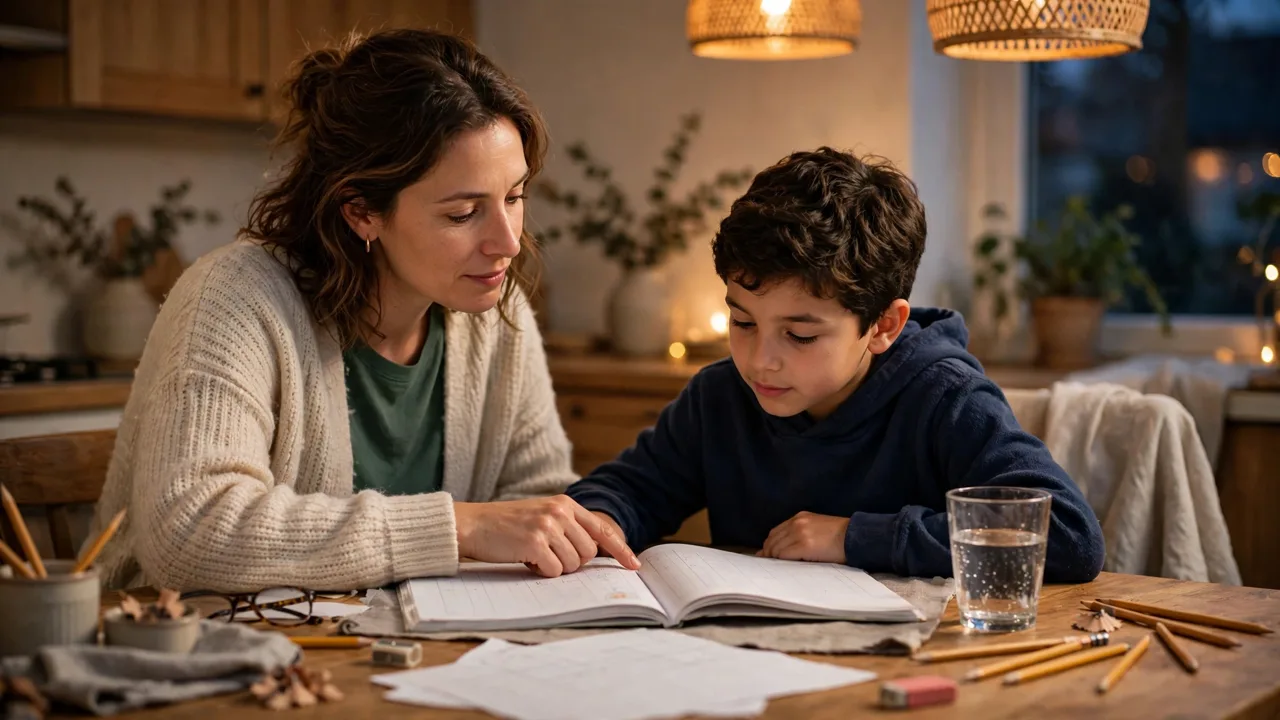
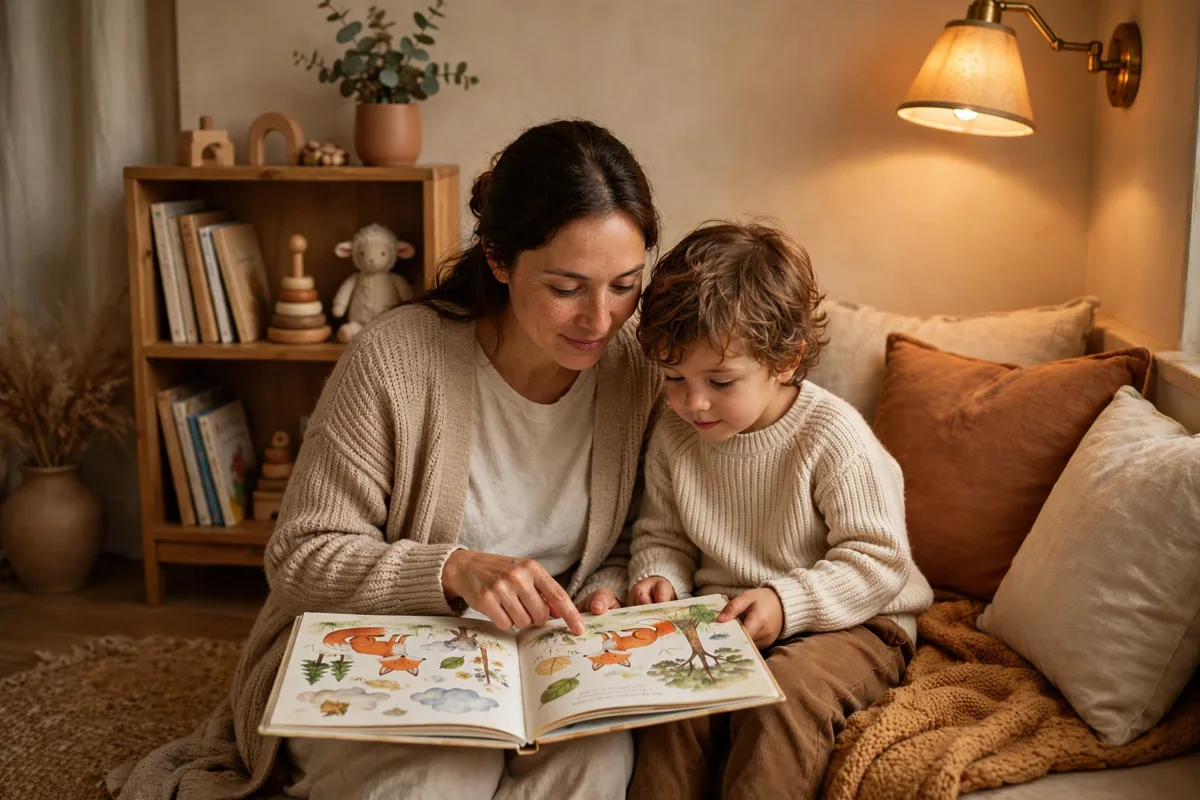
Shared reading is the engine of the habit for younger children, and it stays valuable long after a child can decode words alone. When you read aloud, children hear fluent reading modelled: expression, pacing and the music of sentences. They also access stories far above their independent reading level, which keeps ambitious readers fed.
Talk as you go. Ask what a character might do next, why they behaved as they did, or what your child would have done instead. These small conversations build comprehension — the difference between sounding out words and actually understanding them. They also strengthen the same communication abilities discussed in our guide to fostering positive social skills, because stories give children a safe way to practise reading other people’s minds.
Create a Reading-Friendly Environment at Home
Children copy what they see. If adults in the home read — books, magazines, anything with pages — children absorb the message that reading is something grown-ups choose for pleasure. Let your child catch you reading, and talk about your own books at the table the way you would talk about a programme you enjoyed.
A small reading corner helps too: a cushion, decent light and a shelf or basket of books at child height. It does not need to be elaborate; it needs to be inviting and screen-free. Keep televisions and tablets out of the reading space if you can, not as a punishment, but so the corner has one clear purpose. Gentle structure like this works best when it feels warm rather than policed — a balance our article on setting boundaries while maintaining a nurturing environment discusses for family life generally.
When a Child Resists Reading
Resistance is common and usually has a cause worth finding. Sometimes the books are simply too hard, and every page feels like failure; dropping down a level — even to books that seem easy — rebuilds confidence quickly. Sometimes the problem is format: try audiobooks on car journeys, graphic novels, magazines about a hobby, or non-fiction with photographs and short sections.
What rarely works is pressure. Turning reading into a chore, a test or a bargaining chip teaches a child that books are the obstacle between them and something fun. Keep sessions short, stop at a cliffhanger rather than at exhaustion, and praise effort and finishing rather than speed. Children who struggle with confidence in one area often respond well to the steady, achievable wins that reading provides — much like the gradual confidence-building described in our guide to helping your child build resilience.
Growing the Habit as Children Get Older
As children move into their teens, the habit needs renegotiating rather than enforcing. Offer book tokens as gifts, share articles and stories you think they will argue with, and respect their taste even when it diverges from yours. Many teenagers who “stopped reading” still read constantly — forums, fan fiction, sports reporting, long-form journalism. Recognising that reading counts is often the bridge back to books.
The goal was never a particular number of pages. It is a child who reaches for something to read when they are bored, curious or in need of comfort — and who keeps doing so long after nobody is checking. Build the routine early, keep it warm and unpressured, and the habit will largely take care of itself.