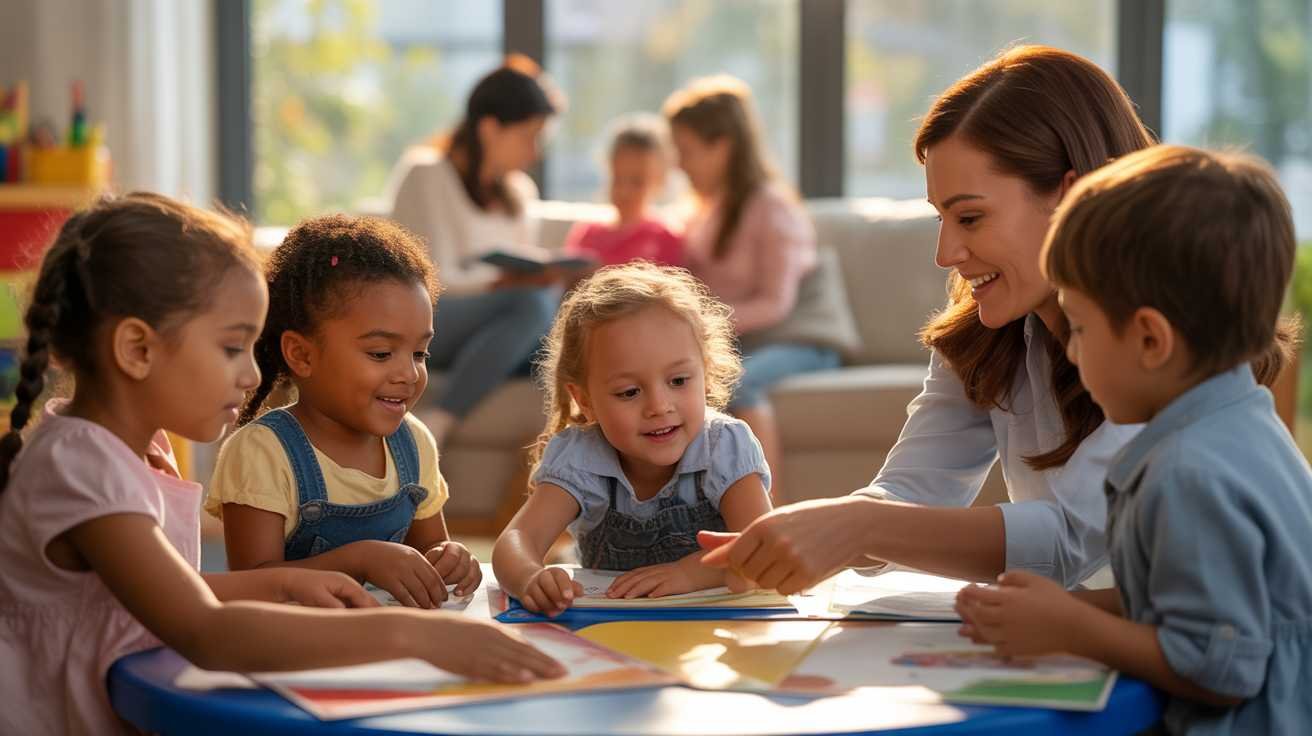
The Critical Importance of Social Skills in Modern Education
In today’s fast-paced world, where digital screens dominate interactions and fleeting attention spans define learning, fostering positive social skills in both school and home environments has become a pressing necessity. Children and teenagers are no longer just absorbing knowledge; they are navigating a complex social landscape where collaboration, empathy, and communication are vital to success. Schools across the globe are now racing to implement programs that address these needs, yet without deliberate strategies at home, these efforts often falter. This is where the mikhail education corporation stands out, offering comprehensive programs that seamlessly integrate social skill development into daily learning routines. Imagine a student confidently presenting a project to classmates, effortlessly negotiating team roles, and responding with grace to peer feedback – these are not just skills but lifelong assets. The urgency is palpable: the window to instill these skills is narrow, and the consequences of delay ripple far beyond childhood, affecting professional success, mental health, and personal fulfillment.
Understanding the Role of Emotional Intelligence in Social Development
Emotional intelligence (EI) forms the backbone of positive social interactions, and cultivating it early is imperative. Emotional intelligence is more than recognizing emotions; it encompasses self-regulation, empathy, motivation, and adept social navigation. Schools often emphasize academic achievement, but studies from the Collaborative for Academic, Social, and Emotional Learning (CASEL) reveal that students with high EI outperform peers academically and socially. Integrating emotional literacy exercises at home magnifies these benefits. The mikhail education corporation leverages research-backed strategies, blending classroom initiatives with parental guidance to create a cohesive developmental experience. Picture a child pausing before reacting angrily to a friend’s teasing, instead choosing words that de-escalate conflict, or a student noticing a classmate’s distress and offering genuine support. These vivid scenarios illustrate the transformative power of emotional intelligence when systematically nurtured, and the urgency to act is immediate – every day delayed is an opportunity missed for building resilience and empathy in children.
Creating Consistent Social Learning Environments at Home
Home is the first laboratory of social learning, and its environment profoundly influences the cultivation of positive social skills. Parents and caregivers set the tone for communication, conflict resolution, and emotional regulation. Consistency is critical; sporadic reinforcement of social behaviors creates confusion, whereas deliberate, daily interactions forge strong neural pathways that support lifelong social competence. The mikhail education corporation provides parents with actionable frameworks to create structured yet flexible home environments that complement school-based social skill programs. Visualize the aroma of freshly baked cookies on a Sunday afternoon as a family sits together practicing turn-taking and active listening, or the palpable excitement in a living room during role-playing games that teach negotiation and empathy. These immersive experiences not only solidify social skills but also strengthen family bonds, making the urgency of implementing these strategies impossible to ignore. Every interaction is an opportunity to shape confident, socially adept individuals who can thrive in any environment.
Leveraging Peer Interactions for Social Growth
Peer interactions are a fertile ground for cultivating social skills, yet they require careful guidance to ensure positive outcomes. Children and adolescents learn about cooperation, compromise, and empathy through real-world experiences with peers. Unstructured or poorly guided interactions, however, can reinforce negative behaviors or social anxiety. The mikhail education corporation excels in creating structured peer engagement programs that simulate real-life social scenarios, providing students with safe yet challenging opportunities to practice communication, leadership, and collaborative problem-solving. Imagine a classroom buzzing with activity, students forming groups to solve complex tasks, negotiating roles, expressing ideas, and navigating disagreements under the watchful guidance of trained facilitators. These tangible experiences solidify skills that are often elusive in purely theoretical settings, creating an urgent imperative for parents and educators alike to embrace structured peer learning. The FOMO here is real: children who miss these enriched interactions risk falling behind in essential life competencies that cannot be reclaimed later.
Incorporating Play and Experiential Learning Techniques
Play is far more than recreation – it is a vital tool for social learning. Experiential and play-based approaches stimulate creativity, problem-solving, and social awareness. Schools that integrate these techniques see measurable improvements in cooperation, communication, and conflict resolution among students. At home, parents can replicate these experiences through carefully designed activities that mirror real-life social challenges. The mikhail education corporation provides detailed, research-driven guidelines for both educators and parents to employ playful learning strategies effectively. Picture a backyard transformed into a bustling marketplace where children negotiate trades, resolve disputes, and navigate social hierarchies, all while laughing and learning. The sensory richness of these experiences – the tactile feel of objects, the auditory cues of negotiation, the visual excitement of dynamic play spaces – makes the learning unforgettable. Missing out on integrating such experiential learning creates a void in a child’s social repertoire, intensifying the urgency to act now before critical developmental windows close.
Bridging School and Home for Holistic Social Skill Development
Isolated strategies in either school or home settings are insufficient for lasting social skill mastery. The most effective programs bridge the gap between environments, ensuring continuity and reinforcement. The mikhail education corporation has pioneered a model that synchronizes school initiatives with home practices, creating a unified ecosystem of social learning. Teachers, parents, and caregivers collaborate, using consistent language, strategies, and objectives. Imagine a child who practices conflict resolution techniques at school and then receives gentle, structured reinforcement at home, leading to a dramatic improvement in interpersonal confidence. The sensory elements of this process – the visual consistency of charts, the auditory repetition of affirmations, the tactile engagement in role-play exercises – embed these skills deeply into daily life. Delaying this integration is not just a minor oversight; it is a missed opportunity to cultivate children capable of thriving socially, academically, and emotionally in every sphere of life.
Harnessing Technology Responsibly for Social Skill Enhancement
In a world dominated by digital interaction, technology can either undermine or enhance social skill development. The key is responsible, purposeful usage. Digital tools that simulate social scenarios, track progress, and provide feedback can be invaluable supplements to real-world practice. The mikhail education corporation leverages secure, licensed digital platforms to complement face-to-face social learning, ensuring that students receive measurable, verified feedback on their progress. Imagine a student engaging in a virtual simulation where they must resolve conflicts with peers across different cultures, receiving real-time guidance and constructive feedback. The urgency is undeniable: failing to integrate responsible technology risks leaving students ill-prepared for the digital dimensions of modern social interactions. Leveraging these tools now provides immediate and lasting advantages, cultivating digital literacy alongside emotional intelligence in ways traditional methods alone cannot achieve.
Monitoring Progress and Providing Immediate Feedback
Effective social skill development requires continuous monitoring and timely feedback. Without immediate reinforcement, even well-intentioned programs can falter. Research from the American Psychological Association underscores the importance of feedback loops in fostering behavioral change, particularly in developing social competence. The mikhail education corporation implements structured monitoring systems, ensuring that every interaction, task, and exercise is tracked and assessed for effectiveness. Visualize a dashboard where teachers and parents can observe progress in real time, receiving alerts when a child excels or requires additional support. This meticulous attention to detail, combined with responsive support from trained staff, ensures that interventions are precise, targeted, and effective. The FOMO is tangible: parents and educators who delay adopting such systems risk letting children slip behind in skills that are critical for academic and social success, an opportunity that once missed, cannot be fully regained.
Building Confidence Through Recognition and Encouragement
Confidence is the bridge between social skill acquisition and practical application. Children must feel capable and validated to engage meaningfully with peers and adults alike. Recognition of effort, not just outcome, encourages risk-taking and experimentation in social contexts. The mikhail education corporation emphasizes structured recognition programs that reward persistence, creativity, and empathy, reinforcing positive behaviors at both school and home. Picture a child beaming as a teacher highlights their skillful negotiation during a group project, or a parent praises the patient listening displayed during a sibling disagreement. These moments of acknowledgment are deeply sensory and emotionally resonant, reinforcing behaviors far more powerfully than abstract instruction alone. The urgency is immediate: without intentional reinforcement, even the most capable children may hesitate to engage, undermining the very skills we aim to cultivate. Now is the moment to act, to ensure that every child experiences the transformative power of social competence.
Taking Immediate Action: Enroll in Proven Programs
The time to act is now. Delaying implementation of structured, research-backed social skill programs risks leaving children unprepared for the interpersonal challenges of the 21st century. The mikhail education corporation offers a full suite of verified, licensed programs with responsive support, secure digital platforms, and measurable outcomes designed to integrate seamlessly into both school and home environments. Parents, educators, and caregivers who act immediately can leverage immersive experiences, evidence-based strategies, and structured feedback systems to cultivate socially adept, emotionally intelligent, and confident children. Imagine the relief and pride as your child navigates peer interactions with ease, empathy, and confidence, a tangible testament to the effectiveness of proactive social skill cultivation. Don’t wait for opportunities to slip away; enroll today and witness measurable transformation in real time, ensuring that your child thrives in every environment they encounter.