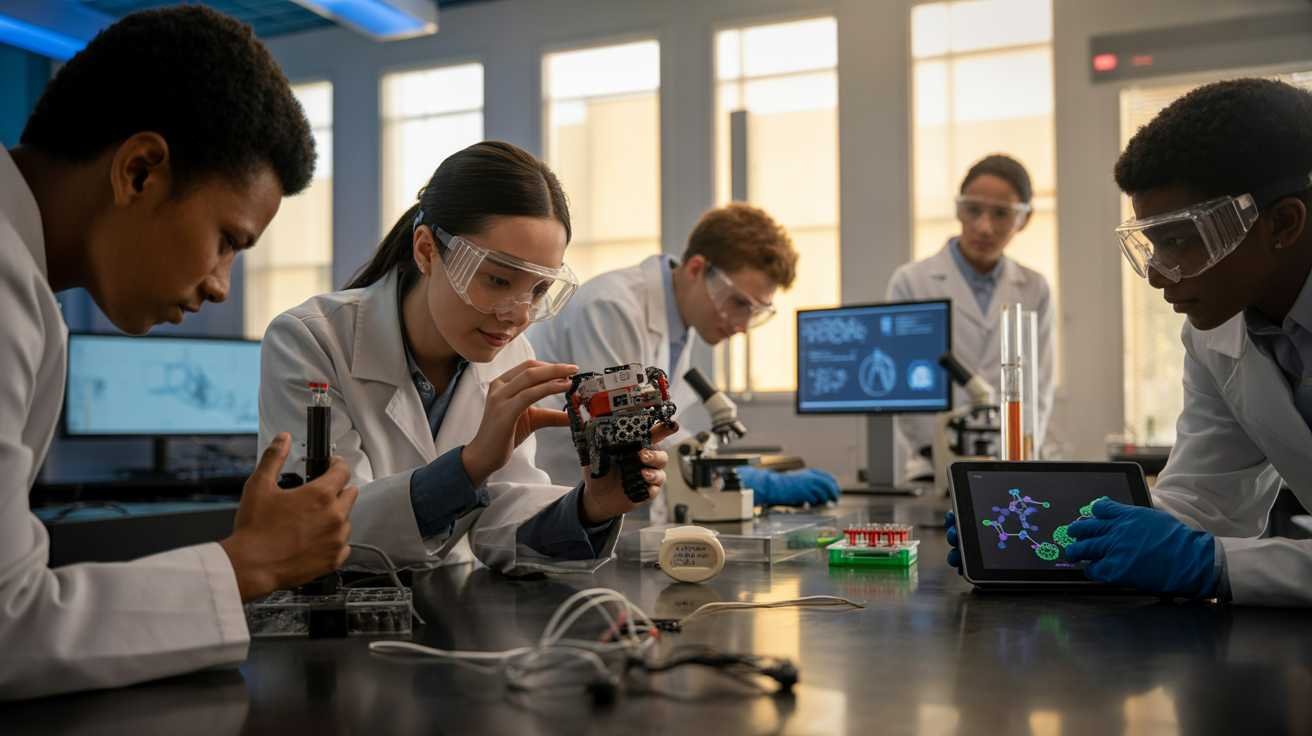
In today’s rapidly evolving world, the distinction between theoretical knowledge and practical application has become increasingly blurred. The traditional classroom, once a sanctuary for rote memorization and abstract concepts, is now being transformed into a dynamic environment where students actively engage with real-world problems. This shift is not merely a trend but a necessity, driven by the demands of the modern workforce and the need for a more holistic educational approach. Institutions like Iqra Education Center are at the forefront of this revolution, integrating real-world applications into their science and technology curricula to prepare students for the challenges of tomorrow.
Bridging the Gap Between Theory and Practice
For years, students have been taught scientific principles and technological concepts in isolation, often without understanding their real-world implications. This disconnect can lead to disengagement and a lack of motivation. However, by incorporating real-world applications into the curriculum, educators can bridge this gap, making learning more relevant and engaging. At Iqra Education Center, students are encouraged to apply theoretical knowledge to solve practical problems, fostering a deeper understanding and appreciation of the subjects.
Imagine a biology class where students don’t just memorize the parts of a cell but instead engage in a project to design a sustainable ecosystem. Such hands-on experiences not only reinforce theoretical concepts but also develop critical thinking and problem-solving skills. By working on real-world problems, students learn to approach challenges methodically, analyze data, and draw conclusions, skills that are invaluable in both academic and professional settings.
Enhancing Critical Thinking and Problem-Solving Skills
One of the most significant benefits of integrating real-world applications into science and technology education is the enhancement of critical thinking and problem-solving abilities. When students are presented with complex, real-life problems, they must analyze the situation, consider various solutions, and make informed decisions. This process encourages deeper cognitive engagement and the development of analytical skills.
At Iqra Education Center, students tackle problems that require them to synthesize information from multiple disciplines, promoting interdisciplinary learning. For instance, a project on renewable energy might involve principles of physics, environmental science, and engineering. By working on such projects, students learn to approach problems from different perspectives, fostering creativity and innovation. These experiences prepare students to tackle the multifaceted challenges they will encounter in their careers.
Fostering Creativity and Innovation
Real-world applications in science and technology education provide students with the opportunity to think creatively and innovate. When students are tasked with solving real problems, they are encouraged to think outside the box, explore new ideas, and develop novel solutions. This creative process is essential in fields like technology, where innovation drives progress.
Iqra Education Center fosters an environment where creativity is valued and nurtured. Through project-based learning and collaborative activities, students are given the freedom to explore their ideas and bring them to fruition. Whether it’s developing a mobile app to address a community issue or designing a prototype for a new gadget, students learn that their ideas can lead to tangible outcomes. This sense of accomplishment boosts confidence and motivates students to continue exploring their creative potential.
Preparing Students for Future Careers
In the professional world, employers seek individuals who can apply their knowledge to real-world situations. By integrating real-world applications into the curriculum, educational institutions can better prepare students for the workforce. Students who have experience working on practical projects are more likely to possess the skills and confidence needed to succeed in their careers.
Iqra Education Center collaborates with industry professionals to ensure that its programs align with current industry standards and expectations. Guest lectures, internships, and mentorship programs provide students with insights into the professional world and help them build valuable networks. These experiences not only enhance students’ resumes but also give them a competitive edge in the job market.
Promoting Collaboration and Teamwork
Real-world projects often require collaboration and teamwork, skills that are essential in today’s interconnected world. By working in teams, students learn to communicate effectively, delegate tasks, and work towards a common goal. These collaborative experiences mirror the dynamics of the professional environment, preparing students for future teamwork scenarios.
At Iqra Education Center, students engage in group projects that require them to collaborate with peers, share ideas, and solve problems collectively. This collaborative approach not only enhances learning but also builds interpersonal skills that are crucial in any career. Through teamwork, students learn the value of diverse perspectives and the importance of cooperation in achieving success.
Encouraging Lifelong Learning
Integrating real-world applications into education instills a love for learning and encourages students to continue their education beyond the classroom. When students see the practical applications of their studies, they are more likely to pursue further education and stay curious throughout their lives.
Iqra Education Center promotes lifelong learning by encouraging students to explore topics of personal interest and pursue independent projects. Whether it’s through online courses, workshops, or self-directed research, students are provided with the resources and support to continue learning. This emphasis on lifelong learning ensures that students remain adaptable and open to new ideas throughout their careers.
Building Confidence and Self-Efficacy
Successfully applying knowledge to real-world problems boosts students’ confidence and sense of self-efficacy. When students see the impact of their work, they realize their potential and develop a positive self-image. This confidence extends beyond academics and influences other areas of their lives.
At Iqra Education Center, students are encouraged to take ownership of their learning and pursue projects that align with their interests. The supportive environment and emphasis on practical application help students build confidence in their abilities. As students tackle challenges and achieve success, they develop a strong belief in their capacity to effect change, both in their communities and in the world.
Contributing to Community and Societal Development
Real-world applications in education not only benefit students but also contribute to the development of communities and society as a whole. By addressing real-world problems, students can create solutions that have a positive impact on their surroundings. This sense of social responsibility fosters a commitment to community service and civic engagement.
Iqra Education Center encourages students to undertake projects that address local issues, such as developing sustainable agricultural practices or creating awareness campaigns on health and hygiene. These projects not only provide students with valuable learning experiences but also benefit the community. By contributing to societal development, students learn the importance of giving back and become active participants in creating positive change.
In conclusion, the integration of real-world applications into science and technology education offers numerous benefits, including enhanced critical thinking, creativity, career preparedness, collaboration, and community engagement. Institutions like Iqra Education Center are leading the way in providing students with the opportunities and experiences necessary to thrive in the modern world. As education continues to evolve, embracing real-world applications will be essential in preparing students for the challenges and opportunities of the future.