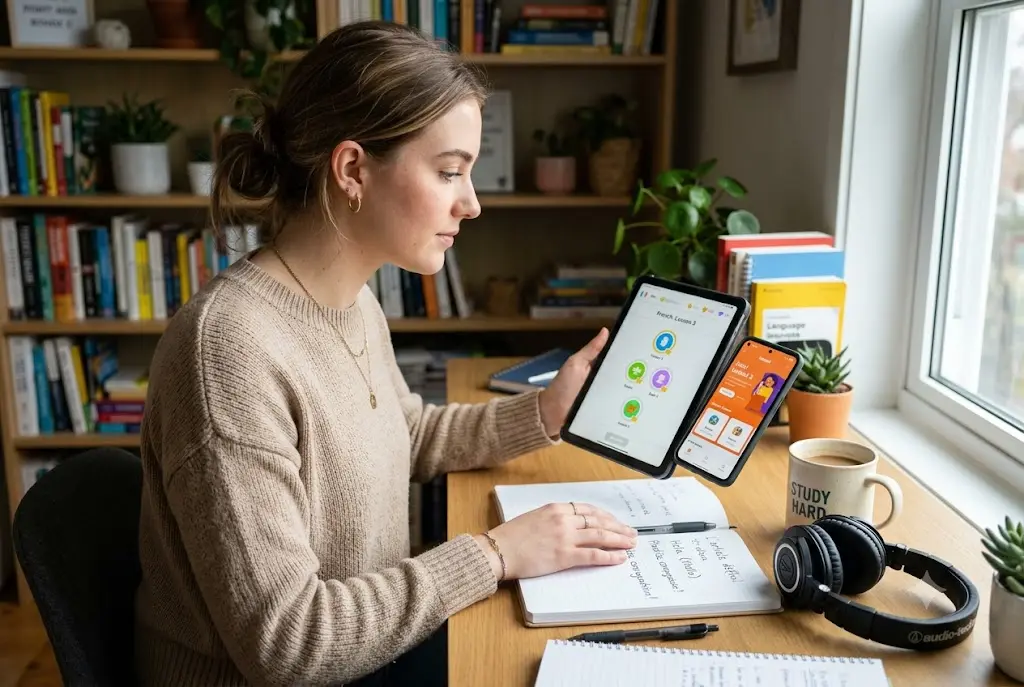
Many language learners start with Duolingo, but eventually begin searching for apps better than Duolingo as their goals become more ambitious. While Duolingo excels at introducing vocabulary and building daily study habits, many learners find themselves needing stronger speaking practice, deeper grammar explanations, and more realistic language exposure.
Fortunately, there are several excellent alternatives available today. Whether your goal is conversational fluency, professional communication, travel preparation, or academic learning, the right app can accelerate your progress significantly.
This guide explores the most recommended language apps better than Duolingo and explains which type of learner each platform serves best.
Why People Look for Apps Better Than Duolingo
Duolingo remains one of the world’s most popular language-learning platforms. However, experienced learners often encounter limitations after reaching the beginner or lower-intermediate stage.
Common reasons people seek alternatives include:
- Limited speaking practice
- Insufficient grammar explanations
- Repetitive exercises
- Lack of authentic content
- Slow progression toward fluency
- Heavy focus on gamification
These concerns regularly appear in language-learning communities and discussions about the best language learning apps Reddit users recommend.
Best Apps Better Than Duolingo for Serious Learners
Babbel
Babbel is frequently mentioned as one of the strongest alternatives to Duolingo because it focuses on practical communication skills.
Lessons are designed around real-world conversations, helping learners build useful language abilities more quickly. Grammar explanations are integrated naturally throughout the course, making concepts easier to understand.
For learners seeking structured progression, Babbel often provides a more traditional educational experience.
Busuu
Busuu combines guided lessons with community-based learning. Users can submit writing exercises and receive corrections from native speakers.
This feature allows learners to practice real communication instead of relying entirely on automated exercises.
Many language learners appreciate the social element because it helps develop confidence and practical skills.
LingQ
LingQ takes a very different approach from Duolingo. Instead of focusing heavily on drills, it encourages learning through authentic content.
Users can study articles, podcasts, interviews, and books while gradually building vocabulary through context.
Many advanced learners believe LingQ provides a more natural path toward fluency.
Pimsleur
If speaking is your primary goal, Pimsleur is often considered one of the best language apps better than Duolingo.
The audio-based lessons prioritize listening comprehension, pronunciation, and conversation skills.
Many users report noticeable improvements in speaking confidence after consistent practice.
Rosetta Stone
Rosetta Stone remains one of the most recognizable names in language education.
Its immersive teaching method avoids direct translations and encourages learners to think in the target language from the beginning.
While opinions vary regarding its effectiveness, many learners appreciate its pronunciation tools and structured curriculum.
Free Language Apps Better Than Duolingo
Not everyone wants to pay for language education. Fortunately, several free language apps better than Duolingo exist for learners on a budget.
Anki
Anki remains one of the most powerful free learning tools available.
Using spaced repetition, it helps learners retain vocabulary and phrases far more effectively than traditional flashcards.
Many polyglots consider Anki a core part of their learning strategy.
Clozemaster
Clozemaster focuses on learning vocabulary through sentence context.
Instead of memorizing isolated words, learners see how language is actually used in real situations.
This approach can accelerate reading comprehension and vocabulary acquisition.
Language Transfer
Language Transfer offers free audio courses for several popular languages.
The lessons focus on understanding language structures and building logical thinking patterns rather than rote memorization.
Many learners consider it one of the most underrated resources available today.
Which App Is Best for Speaking?
Speaking remains one of the biggest weaknesses of many language-learning applications.
For learners focused primarily on conversation, these options are frequently recommended:
- Pimsleur
- Busuu
- italki
- HelloTalk
- Tandem
Unlike traditional lesson-based apps, these platforms provide opportunities for interaction with real speakers.
This type of practice often becomes essential for reaching fluency.
AI Is Changing Language Learning
Artificial intelligence has begun transforming language education. Modern AI tools can simulate conversations, correct mistakes instantly, and personalize lesson recommendations.
Many learners now combine traditional platforms with AI-powered study assistants to accelerate progress.
For learners seeking affordable solutions, our guide to the best free language learning apps explores several emerging AI-powered options.
How to Choose the Right Alternative
The best choice depends on your learning goals.
Choose Babbel If
- You want structured lessons.
- You prefer clear grammar instruction.
- You are learning for travel or daily communication.
Choose LingQ If
- You enjoy reading and listening.
- You want authentic content.
- You are transitioning to intermediate learning.
Choose Pimsleur If
- You prioritize speaking.
- You learn effectively through audio.
- You spend time commuting.
Choose Anki If
- You want better vocabulary retention.
- You prefer customized learning.
- You need a free solution.
What Experts Say About Effective Language Learning
Research consistently shows that successful language acquisition requires multiple forms of practice.
The American Council on the Teaching of Foreign Languages (ACTFL) emphasizes the importance of communication, cultural understanding, listening, speaking, reading, and writing skills working together.
No single app can fully develop every skill. The most successful learners typically combine several tools and learning methods.
Final Thoughts
The search for apps better than Duolingo is not necessarily about replacing Duolingo entirely. Instead, it is about finding tools that address specific weaknesses and help learners move beyond the beginner stage.
Babbel, Busuu, LingQ, Pimsleur, Anki, and several newer AI-powered platforms offer valuable advantages depending on your goals.
The most effective approach is often a combination of resources that support vocabulary development, speaking practice, listening comprehension, grammar mastery, and real-world communication.
By selecting tools that align with your learning style, you can make faster and more sustainable progress toward language fluency.