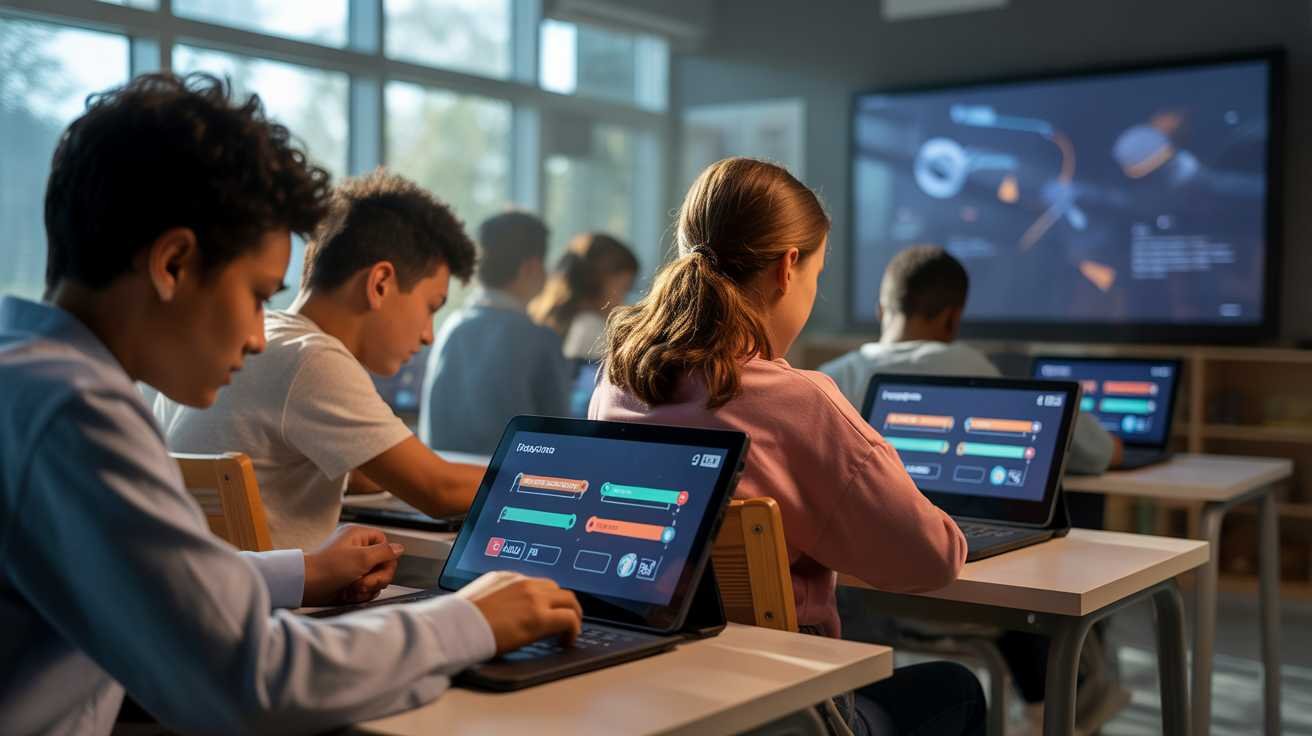
The Rise of Gamification in Modern Classrooms
In the rapidly evolving landscape of education, where traditional lectures and standardized testing are struggling to maintain students’ attention, gamification has emerged as a thrilling revolution. Schools across the United States, particularly those aligned with TIA Texas Education standards, are integrating gamified learning models to supercharge engagement, personalize instruction, and transform outcomes. Picture a classroom where students earn badges, unlock quests, and compete in dynamic leaderboards while mastering mathematics, science, and literature. This isn’t the distant future – it’s happening now. Teachers are watching attendance rates soar, motivation skyrocket, and students immerse themselves in learning experiences that feel more like an adventure than an assignment. The urgency to adopt gamified methods grows daily as institutions that fail to evolve risk losing students’ interest and falling behind in academic innovation. The FOMO is real: educators who delay adoption are watching peers accelerate student performance through interactive platforms supported by cutting-edge analytics and adaptive feedback systems. TIA Texas Education initiatives recognize gamification not as a trend but as a critical pillar of twenty-first-century pedagogy, fostering environments where learners are not passive receivers of knowledge but active participants in their educational journey.
Personalized Learning: Where Gamification Meets Individual Growth
Personalized learning has always been the golden promise of education – the ability to tailor instruction to each student’s unique pace, strengths, and needs. Yet, without the right tools, personalization has often remained an ideal rather than a reality. This is where gamification, fueled by TIA Texas Education frameworks, delivers measurable transformation. Imagine a student struggling with algebra; through gamified modules, they encounter interactive challenges calibrated precisely to their learning level. When they succeed, the system celebrates their progress with rewards that feel tangible – virtual coins, badges, and progress streaks that ignite the brain’s reward centers. Each triumph builds confidence, each setback transforms into a learning opportunity instead of a discouragement. Meanwhile, educators gain access to data dashboards offering real-time insights into performance patterns, enabling intervention before disengagement sets in. The sense of personalization here is electric – students feel seen, understood, and motivated. The classroom evolves into a dynamic ecosystem where learners chase mastery, not grades, and teachers become facilitators of growth. With TIA Texas Education endorsing adaptive gamified solutions, the line between learning and play blurs completely, producing measurable academic improvements that traditional methods could never achieve.
The Science Behind Engagement and Motivation
What makes gamification so irresistible to students? The answer lies in neuroscience. The human brain is wired to seek rewards and respond to challenges with heightened focus and motivation. By leveraging the same mechanics that make video games addictive, educators can transform learning into a dopamine-fueled experience of continuous progress and satisfaction. TIA Texas Education institutions are adopting evidence-based models that show how gamified learning can increase student retention by up to 60% compared to conventional instruction. Through mechanisms like progress bars, level-ups, and peer competition, gamification activates the brain’s intrinsic reward systems, making students crave progress. The sensory-rich environment – filled with colorful visuals, responsive feedback, and immersive storylines – engages both cognitive and emotional centers of the brain. This isn’t about superficial fun; it’s about rewiring motivation. When learning feels like play, resistance disappears, and curiosity thrives. The result? Improved attendance, deeper comprehension, and students who not only study harder but enjoy doing so. Schools under the TIA Texas Education banner are witnessing record-breaking engagement levels, creating an undeniable sense of urgency for others to catch up before they are left behind in an educational renaissance that rewards innovation and creativity.
Gamification Tools Transforming Texas Classrooms
Across the state, districts embracing the TIA Texas Education framework are seeing a surge of new tools that make gamified learning seamless and effective. Platforms like Classcraft, Kahoot!, and Quizizz are not just digital supplements – they’re becoming the heartbeat of interactive learning ecosystems. Teachers are designing quests where history lessons turn into time-travel missions, and science units unfold as intergalactic explorations. Students collect points for collaboration, critical thinking, and creativity, not just for rote memorization. The classroom hums with the energy of discovery as leaderboards refresh in real-time, showcasing achievements and sparking friendly competition. The beauty lies in the flexibility: educators can align every gamified element with specific curriculum standards and learning objectives set forth by TIA Texas Education. The shift is not cosmetic – it’s structural. Schools that integrate these gamified solutions report increases in academic performance metrics, behavioral engagement, and social interaction among students. Teachers, often overwhelmed by administrative demands, find renewed excitement as they watch disengaged learners transform into active participants. The evidence is irrefutable: gamification isn’t a passing trend; it’s the new language of learning, and those who fail to adopt it risk becoming obsolete in the face of digital-native learners demanding more immersive educational experiences.
Real-World Success Stories: Proof of Concept
In districts aligned with TIA Texas Education, countless success stories validate the power of gamification. One Texas middle school implemented a point-based literacy challenge that turned reading into a competition, resulting in a 45% increase in reading comprehension scores within a single semester. Another elementary school in Austin introduced a digital badge system where students unlocked “achievement tiers” for math fluency, leading to measurable gains across standardized assessments. Parents reported seeing their children eager to do homework for the first time, treating learning apps like adventure games instead of chores. Teachers, equipped with real-time analytics, tailored instruction to support each learner’s journey – something that once seemed impossible within traditional structures. Beyond academic metrics, the emotional and behavioral transformation was profound: students demonstrated greater collaboration, empathy, and persistence. These real-world examples illustrate how TIA Texas Education strategies bring gamified learning from theory into reality, generating measurable academic uplift and emotional resilience. The stories are multiplying, fueling a sense of urgency among educators statewide who see gamification not just as innovation but as a lifeline for keeping pace with an ever-digital generation of learners hungry for challenge, recognition, and reward.
Data-Driven Personalization and Secure Implementation
Gamified learning is powerful – but only when it’s data-driven, secure, and personalized to the learner. Under TIA Texas Education guidelines, implementation isn’t guesswork; it’s precision engineering. Modern gamification platforms use machine learning to adapt content based on performance, engagement levels, and behavioral patterns. This means no two students experience the same journey. As they progress, the system dynamically adjusts the difficulty, content style, and feedback mechanism to sustain motivation. Security is paramount, with verified encryption standards ensuring student data privacy. Schools leveraging these systems gain more than engagement – they gain trust. Verified certifications, transparent licensing, and compliant data management practices make gamification a safe, scalable, and sustainable model. The result is a digital learning ecosystem that’s both exhilarating and responsible. Students receive customized learning experiences; educators receive actionable insights; parents receive peace of mind. The stakes couldn’t be higher: schools that don’t invest in secure, adaptive gamified learning risk lagging behind institutions already transforming their classrooms into data-driven playgrounds of creativity and mastery. TIA Texas Education isn’t just a framework – it’s the gold standard for implementing innovation responsibly, with tangible results verified by rigorous educational analytics and student outcomes.
Bridging the Gap Between Play and Purpose
Critics once dismissed gamification as frivolous – play disguised as learning. But as TIA Texas Education initiatives demonstrate, gamification is far from trivial; it bridges the critical gap between play and purpose. Every game element serves a pedagogical function: leaderboards encourage collaboration and perseverance, while narrative-driven missions strengthen comprehension and critical reasoning. Students aren’t merely collecting points – they’re mastering complex concepts under the guise of exploration. Teachers, in turn, harness these mechanics to nurture intrinsic motivation, guiding students toward self-directed learning habits. The transformation is visible: engagement metrics rise, absenteeism drops, and classroom morale flourishes. Imagine walking into a school where hallways buzz with the excitement of shared achievements, where students proudly display digital trophies that represent hours of concentrated learning. Gamification reframes failure as feedback, inviting iteration instead of shame. This emotional safety net fosters resilience – a crucial life skill in a world that values adaptability. The synergy of purpose and play is no accident; it’s the deliberate outcome of TIA Texas Education’s forward-thinking vision to make education both meaningful and magnetic. The future of learning is no longer about compliance – it’s about curiosity, courage, and continual growth fueled by interactive design and authentic engagement.
The Competitive Edge: Why Institutions Can’t Wait
The race to adopt gamified learning is no longer theoretical – it’s happening in real time, and the window to stay competitive is closing fast. Schools under the TIA Texas Education framework are already reporting significant performance advantages, creating a growing divide between institutions that innovate and those that hesitate. Parents are choosing schools that prioritize engagement; students are thriving where motivation meets mastery. The fear of missing out is tangible among administrators still deliberating on digital transformation while neighboring districts are leaping ahead with gamified programs that yield verifiable success metrics. Industry data shows a direct correlation between gamified curriculum integration and improved student retention rates, higher standardized test scores, and enhanced social-emotional learning outcomes. The implications extend beyond classrooms: graduates from gamified systems demonstrate stronger problem-solving skills and digital literacy, qualities sought after by employers in every field. Waiting is no longer an option. Every semester delayed is another missed opportunity to engage, inspire, and lead. TIA Texas Education stands as the benchmark for forward motion, urging schools to act now – to innovate before the curve becomes insurmountable and the next generation’s potential remains untapped.
Taking Action: How Educators Can Start Today
For educators ready to take the leap, the time is now. The pathway to gamified, personalized education through TIA Texas Education initiatives begins with one decision: to embrace innovation. Schools can start by assessing existing learning platforms, integrating gamified features into digital classrooms, and training teachers in interactive pedagogy. Partnering with verified technology providers ensures that implementation aligns with state standards and data security protocols. Educators can begin small – introducing quest-based assignments or achievement systems – and scale as engagement grows. The transformation is immediate and exhilarating. Teachers rediscover joy in instruction, students rediscover passion in learning, and parents witness tangible progress. Don’t wait for the next academic cycle; every delay means another group of students missing out on the motivational magic of gamified education. Visit TIA Texas Education to explore certified gamification programs, verified success stories, and responsive support networks that guide schools through implementation. With the right tools, the classroom becomes an immersive learning hub where curiosity thrives, mastery grows, and achievement never feels out of reach. The urgency is clear – act now, or risk watching innovation pass you by while others sprint ahead into a future where education and engagement finally align as one powerful, transformative force.
If you want to engage your students in a playful learning environment, explore the innovative tools available in our guide on the Meta Title that empower teachers to create captivating educational games.