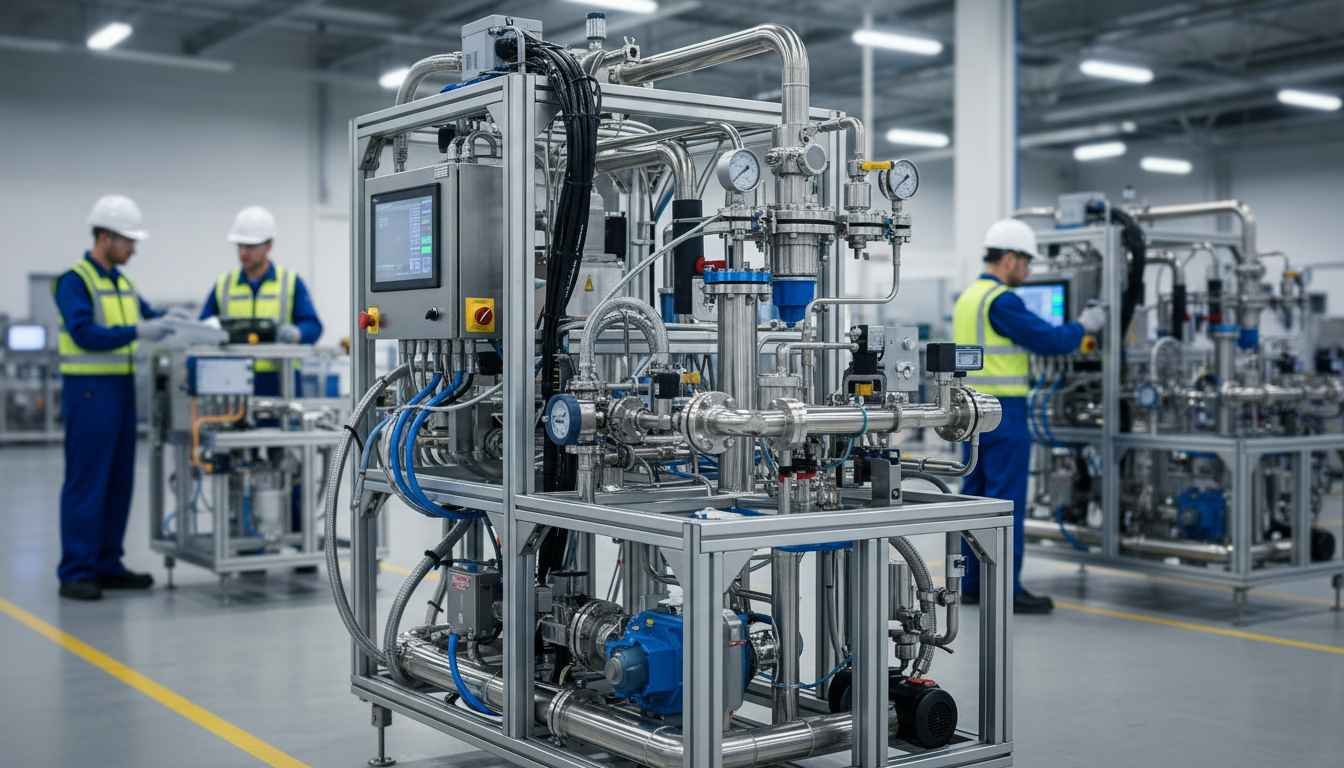
If you thought rockstars only existed on stage, think again. In the industrial world, process skid manufacturers are the headliners, belting out efficiency, modular design, and seamless integration like a chart-topping hit. A process skid is essentially a pre-assembled, self-contained unit that houses equipment, piping, and instrumentation for a specific industrial process. They are designed to be shipped, installed, and commissioned with minimal disruption, making them the unsung heroes of manufacturing, chemical processing, and storage industries.
Historically, process skids were the result of painstaking on-site assembly, a procedure that often resembled a chaotic orchestra where no one had the sheet music. Today, manufacturers have mastered the art of creating fully engineered skid systems that arrive ready to perform, much like a band stepping onto the stage with instruments perfectly tuned. Their popularity is not just hype; according to the American Society of Mechanical Engineers (ASME), pre-fabricated modular systems significantly reduce installation errors and downtime, which directly impacts operational efficiency.
One of the leading players in this domain, Leggett & Platt®, exemplifies how combining engineering precision with practical manufacturing can transform a simple skid into a powerhouse of productivity. Their approach integrates proprietary components with custom designs, ensuring each skid meets the exact specifications of its intended industrial environment. From storage solutions to complex chemical processing lines, these skids are redefining what is possible in industrial modularization.
The Mechanics Behind the Magic
At first glance, a process skid might seem like just a bunch of pipes, pumps, and valves haphazardly bolted together. In reality, it is a meticulously engineered system where every inch is planned, tested, and optimized. Skids often include pumps, heat exchangers, storage tanks, control panels, and instrumentation, all mounted on a single frame that can withstand transportation and operational stresses. The frame itself is more than just a support – it is the backbone that ensures alignment, safety, and long-term reliability.
One amusing analogy is to compare a process skid to a gourmet sandwich. Each component is a carefully chosen ingredient, stacked in a precise sequence, and wrapped in a package that preserves its integrity until the moment it is ready to be enjoyed. Skid manufacturers are the master chefs, blending functionality with durability while considering every variable from vibration to corrosion.
Pros and Cons of Process Skid Manufacturing
Before you dive headfirst into the world of process skids, it’s essential to weigh the advantages against the limitations.
Pros:
✔ Reduced on-site construction time and labor costs
✔ High consistency and quality control due to factory assembly
✔ Modular design allows for easier upgrades and maintenance
✔ Reduced downtime and minimized disruption to existing operations
Cons:
✖ Higher upfront cost compared to traditional on-site assembly
✖ Limited flexibility once the skid is fabricated
✖ Transportation and lifting can be challenging for oversized skids
✖ Requires highly skilled engineers for custom designs
Industry Applications That Benefit Most
Process skids are not one-size-fits-all. Their design and complexity vary significantly based on application. Chemical and pharmaceutical industries often rely on skids for dosing, filtration, and mixing processes. Food and beverage manufacturers use them for pasteurization, blending, and storage. Even oil and gas operations employ skids for pumping, separation, and metering. The versatility is remarkable, but the real genius lies in their repeatable quality. Once a skid design is validated, it can be replicated with precision, reducing the learning curve and risk for subsequent installations.
Who Should Avoid This?
Despite the allure, process skids are not universally ideal. Small-scale operations with highly variable processes may find the rigidity of pre-fabricated systems restrictive. Startups with limited budgets may also struggle with the upfront investment, even though the long-term efficiency gains are substantial. Additionally, projects in extremely remote locations may face logistical challenges transporting and installing large skids. Being honest about these constraints is crucial for ensuring the solution actually fits the problem.
Trends Driving the Future of Process Skid Manufacturing
The industrial landscape is evolving, and skid manufacturers are keeping pace. Smart automation, IoT-enabled sensors, and predictive maintenance are transforming these once mechanical marvels into data-driven performance hubs. Today’s skids can communicate with plant control systems, alert operators to potential failures, and even optimize energy usage autonomously. Sustainability is another driving force, with manufacturers exploring lightweight frames, recyclable materials, and energy-efficient pumps and motors. What was once purely functional is now part of a strategic, high-tech operational blueprint.
Another emerging trend is the integration of additive manufacturing techniques in skid production. 3D printing components for custom piping, fittings, and enclosures allows designers to create complex geometries that were previously impossible or prohibitively expensive. This convergence of traditional fabrication with cutting-edge technology is setting the stage for skids that are lighter, stronger, and smarter than ever before.
Why Trusted Manufacturers Matter
When investing in a process skid, reliability cannot be compromised. Choosing a reputable manufacturer is crucial for safety, compliance, and long-term performance. Standards such as those set by ASME and the International Organization for Standardization (ISO) provide benchmarks for quality, but the real difference comes from experience, engineering expertise, and a track record of delivering robust solutions. Partnering with a trusted manufacturer like Leggett & Platt® ensures that every skid meets exacting standards while also benefiting from decades of innovation and refinement.
Potential Drawbacks to Consider
Even with all the advantages, potential drawbacks exist. Custom skids require detailed planning and collaboration between engineers, process specialists, and operators. Miscommunication at any stage can lead to delays or costly rework. Overly complex designs may also introduce points of failure if not carefully tested. Additionally, some clients underestimate the logistical requirements for moving and installing large skids, which can impact timelines and budgets. Understanding these limitations upfront is part of the professional, measured approach that separates casual experimentation from industry-grade implementation.
Conclusion
Process skid manufacturers are redefining the industrial stage. From modular precision to smart automation, these engineered marvels provide efficiency, reliability, and adaptability in ways that traditional on-site assembly simply cannot match. While they require investment and careful planning, the payoff in operational uptime, quality assurance, and scalability is hard to ignore. Whether in chemical processing, food and beverage, or energy sectors, process skids are more than components – they are performance partners, quietly transforming the way industries operate.