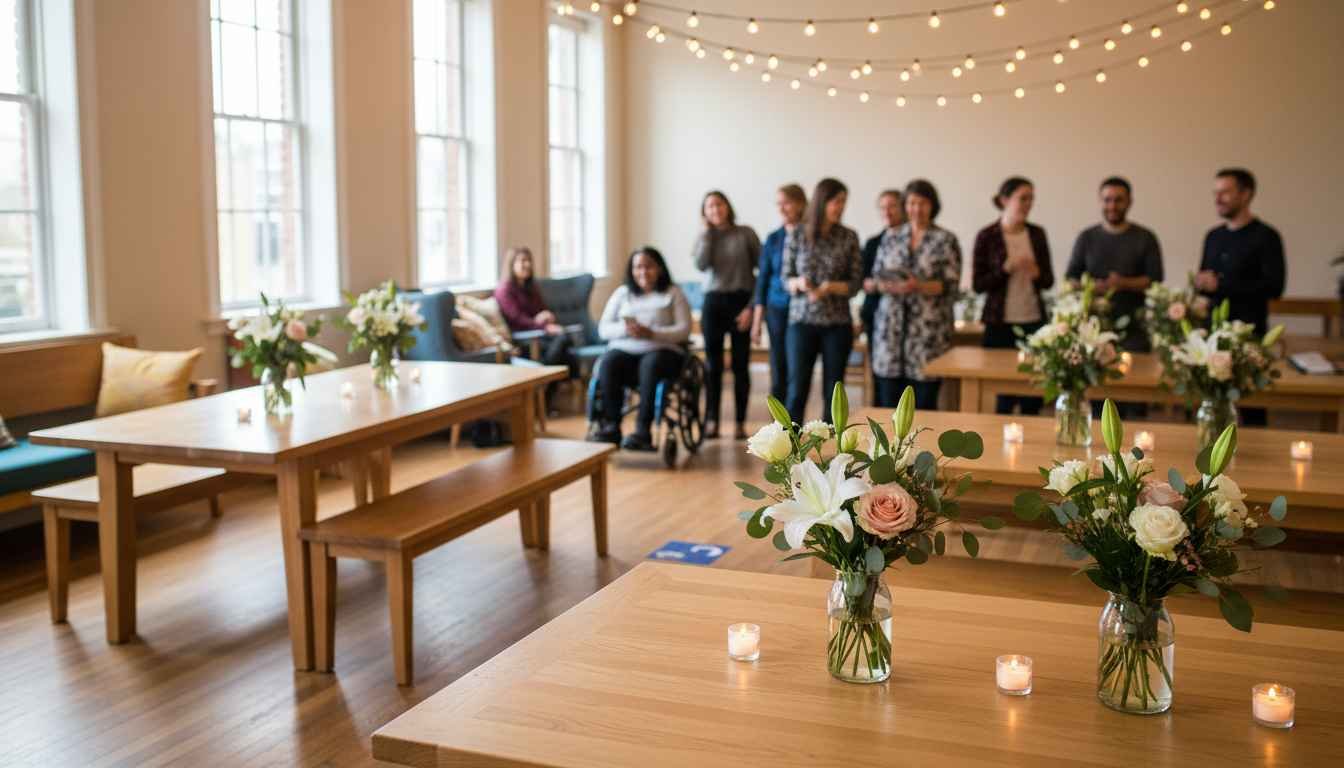
This is a love letter to the overlooked corners of our mission-driven gatherings, the empty halls that hold the echoes of purpose and potential. When I first began working with non profit event spaces, I imagined them as nothing more than neutral containers – four walls and a roof – but over the years, I’ve realized they are so much more than that. They are the silent enablers of connection, the physical manifestation of intent, and sometimes, the subtle challenge to the ambitions we carry in our briefcases and backpacks.
In the early days, I believed that any venue would do, as long as it had chairs and a projector. I was wrong. What I did not understand then was the critical importance of aligning the space with the ethos of the organization and the energy of the attendees. A room can either amplify the work you are trying to accomplish or quietly sabotage it by sending the wrong signals. The acoustics, the lighting, the accessibility, and even the history embedded in the walls can influence outcomes more than I ever expected.
Non profit event spaces are not only about capacity or location; they are about narrative. Hosting a fundraising gala in a space that reflects your mission can catalyze engagement, while a mismatched venue can mute it. As I learned, the space must tell a story that complements, not competes with, your organization’s message. There is a subtle psychology to this: when donors, volunteers, and stakeholders feel immersed in the environment, they are more likely to invest not just money, but time and heart.
Let me be honest about what I do not fully understand. I cannot precisely quantify the impact of every environmental nuance – why one room inspires and another does not remains partly subjective, partly situational. But through repeated observation, patterns emerge. Natural light and open layouts tend to foster more collaboration. Flexible seating arrangements create comfort that translates into willingness to participate. Even the smell of a space – the faint hint of old wood, or the clean sterility of modern design – affects mood and engagement in ways that are difficult to measure yet undeniably present.
In navigating these spaces, practical considerations cannot be ignored. Accessibility for all participants is non-negotiable. Transportation, parking, and digital connectivity must meet baseline expectations. Additionally, budgeting constraints often dictate choices, and this is where compromise comes into play. It is rare to find a venue that is perfectly aligned with mission, aesthetics, and affordability. Learning to prioritize needs over wants without diluting the integrity of the event is a skill honed over time.
By the time I fully appreciated these dynamics, I began to view venue selection as a strategic decision rather than a logistical one. Partnerships with local community centers, educational institutions, or historic sites became more than convenient – they became opportunities to deepen the relationship between the organization and its environment. Each selection conveys intent and reflects values. For those in the DPCA network, understanding these connections is part of the membership experience, where insights and best practices are shared. For more resources on venue considerations, the DPCA website provides a thorough starting point for exploring suitable non profit spaces.
Best For / Not Recommended For
Best For: Organizations seeking to create immersive experiences, drive engagement, and align the physical environment with mission-driven narratives. Event planners who value flexibility, accessibility, and strategic symbolism in their choice of venue.
Not Recommended For: Groups with extremely tight budgets that cannot accommodate essential logistical requirements. Non profits looking solely for utilitarian spaces without consideration for ambiance or audience experience. Individuals unfamiliar with local regulations or accessibility standards may struggle to meet necessary compliance.
As communities continue to seek innovative solutions to pressing social issues, the role of corporate philanthropy becomes increasingly significant. Walmart, one of the largest retailers in the world, has established a robust framework for supporting non-profit organizations through its grant initiatives. Understanding the timeline and opportunities associated with these walmart non profit grants can empower community leaders to effectively leverage these resources for impactful projects. This article delves into the specifics of Walmart’s grant offerings, highlighting key dates and strategies to maximize community benefits while fostering sustainable development in various sectors. By engaging with these opportunities, organizations can drive meaningful change in their neighborhoods and beyond.
Potential Drawbacks
Despite careful planning, non profit event spaces come with inherent limitations. Availability can be unpredictable, particularly for sought-after historic or community-oriented venues. Costs may fluctuate depending on season, utility requirements, and staffing needs. Even with thorough vetting, technical issues such as audiovisual equipment failure or inadequate acoustics can occur. Finally, the subjective nature of ambiance means that no space is universally ideal; what energizes one group may intimidate another.
Early in my career, I underestimated the significance of venue history. Older buildings often carry charm and character but may lack modern amenities or accessibility features. Conversely, newer spaces provide convenience but can feel sterile or impersonal. The challenge is to balance these elements thoughtfully, prioritizing mission impact while remaining realistic about operational constraints. Observing these patterns over time has been invaluable in refining my approach.
Non profit event spaces also invite reflection on community engagement. Hosting events in local, culturally relevant locations can enhance outreach efforts and demonstrate tangible commitment to the communities served. These choices, however, require research and relationship-building that extend beyond mere logistics. Engaging with property managers, neighborhood associations, and local authorities often shapes the ultimate success of an event. Underestimating these factors can result in delays, conflicts, or diminished participation.
There is an undercurrent here about sustainability. The environmental footprint of hosting events is non-trivial. Energy usage, waste management, and transportation logistics are considerations that non profit organizations increasingly cannot ignore. Choosing a venue aligned with green initiatives or that supports waste reduction sends a secondary message reinforcing organizational values. This attention to detail may seem peripheral but often resonates strongly with stakeholders who care about ethical alignment as much as mission objectives.
Reflecting on the past, I wish I had known to plan for contingencies more rigorously. A failed AV setup, a miscalculated capacity, or an unexpected maintenance issue can disrupt even the most meticulously organized gatherings. My younger self would have benefited from documenting each learning experience and creating a structured evaluation template for all future events. Now, we routinely score potential venues on a matrix considering accessibility, capacity, ambiance, cost, sustainability, and mission alignment. This systematic approach reduces uncertainty and supports more deliberate decision-making.
Perhaps most importantly, non profit event spaces demand emotional intelligence. Observing how attendees interact with a space, how facilitators adjust to the environment, and how the energy of a room evolves over time reveals nuances that spreadsheets and charts cannot capture. Over time, I have learned to trust these subtle signals, balancing them with empirical data and operational constraints to make informed decisions. This blend of art and science forms the cornerstone of effective event planning in the non profit sector.
As I look back, I realize that mastery in this domain is iterative and relational. The goal is not perfection but informed adaptability. Selecting non profit event spaces requires balancing competing priorities while remaining attuned to human experience and organizational mission. The process is both methodical and intuitive, demanding attention to detail, empathy, and strategic foresight. My younger self would have been well served to embrace this duality early, understanding that the physical environment is inseparable from the impact of the event itself.
Ultimately, non profit event spaces are vessels of intention. They are where mission meets manifestation, where vision encounters reality, and where engagement takes tangible form. Choosing them wisely requires patience, insight, and a willingness to learn from missteps. While I cannot promise a formula for perfect outcomes, I can attest that deliberate consideration, coupled with critical reflection and openness to feedback, increases the likelihood that each gathering fulfills its purpose in ways both measurable and ineffable.