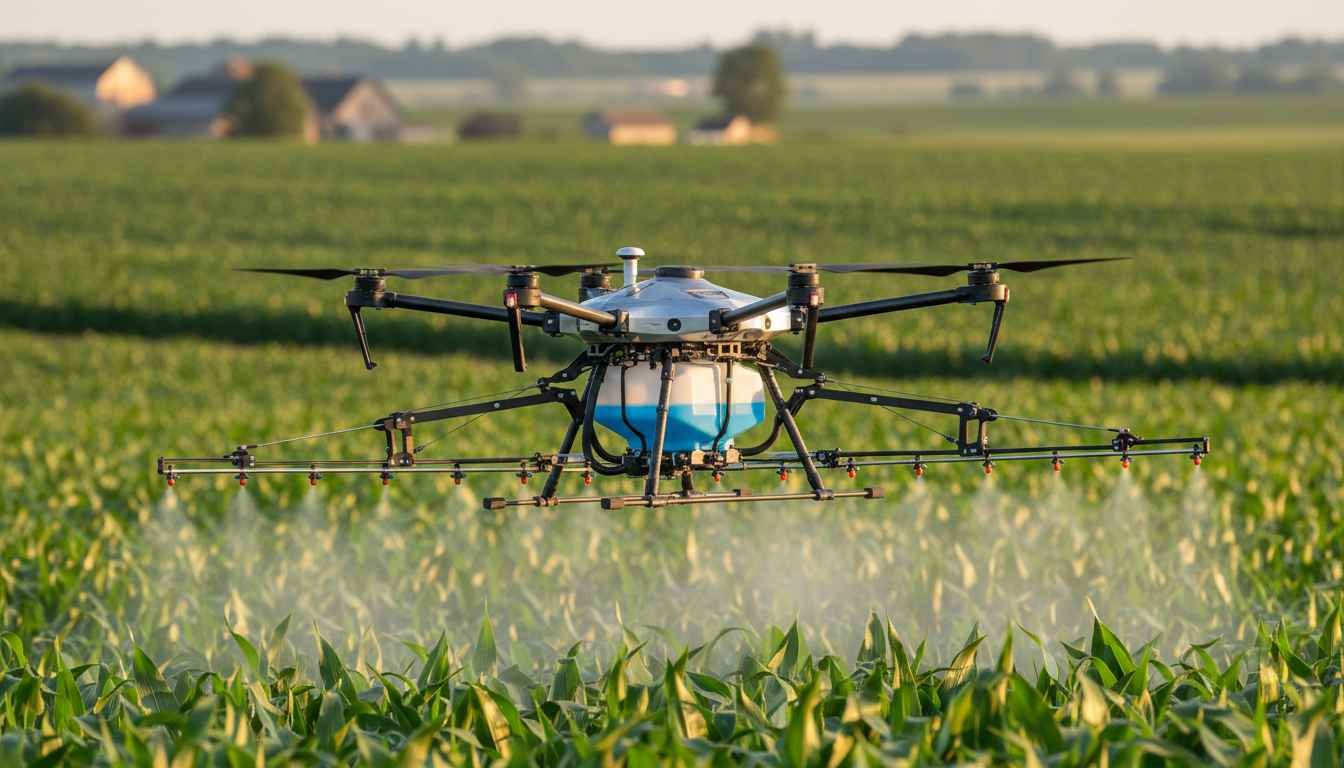
I made a huge mistake when I first underestimated the precision and efficiency that agricultural sprayer drones could bring to modern farming. Like many traditional farmers, I clung to conventional methods – tractors, manual spraying, and guesswork – but the moment I saw a drone in action, hovering effortlessly over acres of crops with pinpoint accuracy, I realized how far behind I had fallen.
The rise of agricultural sprayer drones is transforming the way farms operate, blending technology with age-old agricultural practices. While my initial hesitation cost me time and resources, it also led me on a journey to understand the full potential and limitations of this technology. In this curated resource, I want to share my findings, insights, and practical advice to help you navigate the evolving world of drone-assisted farming.
Agricultural Sprayer Drone: An unmanned aerial vehicle equipped to spray pesticides, fertilizers, or other treatments over crops efficiently.
Drone Autonomy: The ability of a drone to navigate and operate with minimal human intervention.
Precision Agriculture: The use of technology to monitor and manage crops at a micro-level for maximum efficiency.
Understanding Agricultural Sprayer Drones
Agricultural sprayer drones are designed to tackle the inefficiencies inherent in traditional crop spraying methods. Unlike ground-based systems, these drones can reach difficult terrain, reduce chemical usage, and complete tasks in a fraction of the time. Their appeal lies not only in efficiency but in sustainability. With precision application, farmers can minimize chemical runoff, reduce fuel consumption, and limit environmental impact.
Many drones today offer features such as GPS-guided flight, obstacle avoidance, and real-time data collection, enabling farmers to make informed decisions about crop health and treatment schedules. For example, a drone can map a field and identify areas requiring more attention, directing sprays only where necessary. These advancements mark a shift from intuition-driven practices to data-driven precision agriculture.
For those interested in exploring equipment options and detailed specifications, resources like Everythingattachments offer extensive listings of drone models, sprayer attachments, and accessories that suit different farm sizes and crop types.
Top Agricultural Sprayer Drone Models
Choosing the right drone can be overwhelming, given the variety of models and capabilities. Some of the top-performing agricultural sprayer drones currently include:
DJI Agras Series
The DJI Agras series is renowned for high payload capacity, extended flight time, and advanced spraying technology. With models capable of covering several hectares per flight, these drones offer smart spraying patterns and automatic refilling, making them ideal for medium to large farms.
Hylio AG-122
Hylio’s drones are lightweight yet powerful, featuring multiple nozzles for even chemical distribution and AI-assisted navigation for obstacle avoidance. Their modular design allows for easy maintenance and part replacement.
XZAG Robotic Sprayers
XZAG focuses on autonomous operation and real-time monitoring. Their drones integrate soil moisture and crop health sensors, offering precise data that can inform fertilizer or pesticide application schedules.
Benefits of Using Sprayer Drones
From increased efficiency to environmental considerations, the advantages of adopting agricultural sprayer drones are significant:
1. Improved Coverage and Speed: Drones can complete tasks much faster than manual or ground-based spraying, covering large fields in a single flight.
2. Precision and Reduced Waste: With GPS-guided systems, drones apply chemicals exactly where needed, reducing over-application and minimizing waste.
3. Reduced Labor Costs: Automation reduces the need for manual labor and decreases exposure to potentially harmful chemicals.
4. Environmental Sustainability: Targeted application limits chemical runoff and protects nearby ecosystems.
Potential Drawbacks
While drones are powerful tools, they are not without limitations. Here are some challenges to consider before investing:
1. Initial Investment: High-quality agricultural drones can be expensive, requiring careful budgeting and planning.
2. Technical Expertise: Operators must be trained in drone navigation, maintenance, and compliance with aviation regulations.
3. Weather Dependency: Drones are sensitive to high winds, rain, and extreme temperatures, which can limit operational days.
4. Battery Life and Coverage: While technology is improving, drone flight time is limited, necessitating multiple batteries or recharging for large fields.
Regulations and Safety Considerations
Compliance with local aviation authorities is crucial. Many countries require drone registration, operator certification, and adherence to specific flight restrictions, especially near populated areas or sensitive environments. Ignoring these regulations can lead to fines, liability, or restricted access to farmland.
Safety also extends to chemical handling. Operators must ensure proper protective gear, secure storage of chemicals, and accurate mixing to avoid environmental contamination or damage to crops.
Integrating Drones into a Sustainable Farming Strategy
For farmers interested in long-term sustainability, agricultural sprayer drones should be integrated into a broader precision agriculture strategy. Combining drones with soil sensors, automated irrigation, and crop health monitoring systems allows for a holistic approach to farm management. The data collected by drones can inform planting schedules, fertilization timing, and pest control measures, creating a feedback loop that enhances productivity while protecting resources.
Who Should Avoid This?
Sprayer drones are not suitable for every farm or farmer. Small-scale gardens or farms with dense tree coverage may not see enough efficiency gains to justify the cost. Additionally, operators uncomfortable with technology or unwilling to invest in training may struggle with drone management. Farms in regions with strict drone regulations or frequent adverse weather should weigh potential downtime before investing heavily.
Conclusion
Looking back, my initial mistake of underestimating agricultural sprayer drones was a costly lesson – but one that ultimately reshaped my approach to farming. These drones are more than just machines; they are tools for precision, efficiency, and sustainability. For farms ready to embrace technology, integrating drones into daily operations can lead to better yields, safer chemical application, and long-term resource conservation. Understanding the capabilities, limitations, and strategic value of these drones is essential for any forward-thinking farmer.